 |
|
|
|
bekristo on Tour 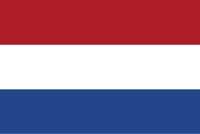 The flag of the Netherlands 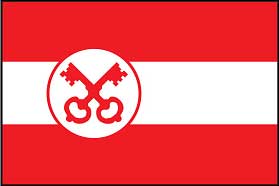 The flag of Leiden |
|
||
iFrom Alphen, we drove the A4 to and through
Leiden and entered the city from the west. Parked the car by the
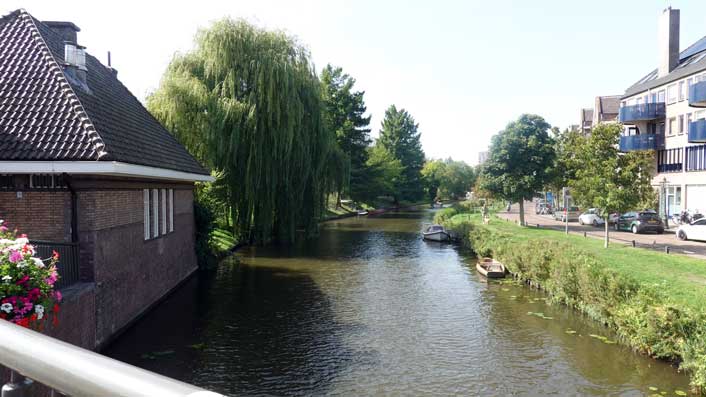
train station and set off on foot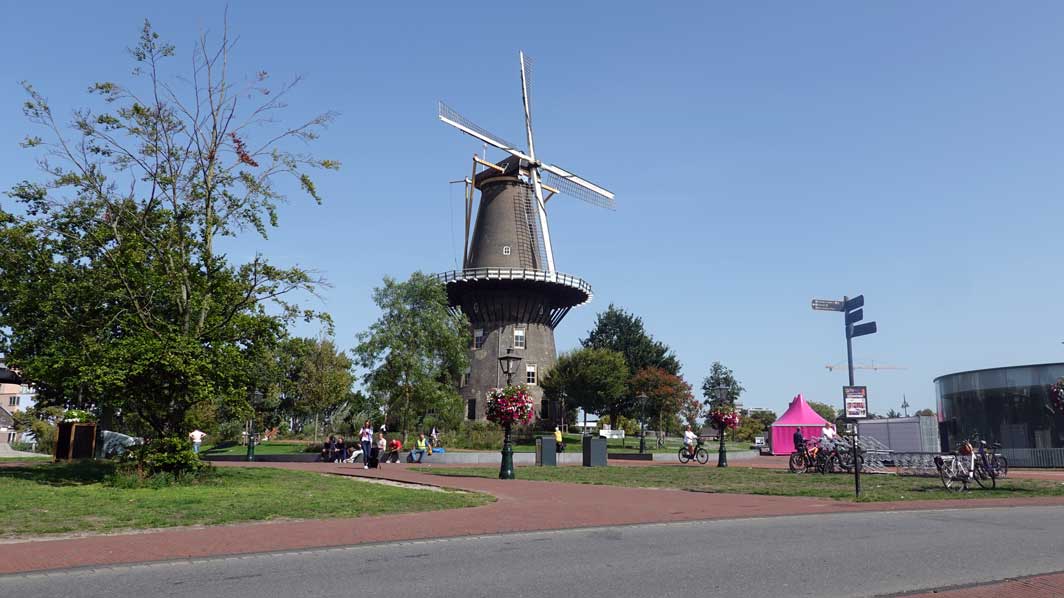 - After a short walk we made a pit stop in a park and got to see the Molenmuseum De Valk, a windmill towering over Leiden's most famous buildings and most central windmills. The distinctive silhouette is a clear symbol of the Netherlands' long and proud milling tradition. This grain mill was built in 1743, stretches over seven floors, and is now a museum. And the Belgian beer they could recommend was good. Just as Belgian beer should be. 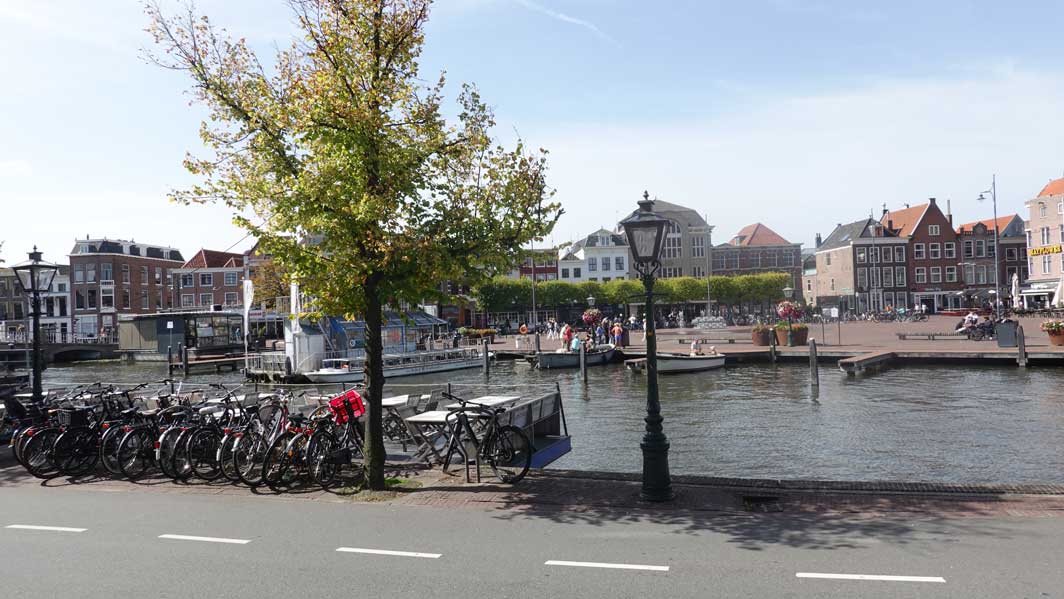 - So we wandered on a little further, heading south this time. We passed one canal after another—or was one of them actually the river?—crossing a few little bridges along the way. It was surprisingly lively for an ordinary Monday, with people everywhere. Leiden is known for its extensive canal system. Around the historic center, there’s a canal ring of about 6.5 kilometers, while the whole network of canals in the city is reported to be around 28 kilometers. The canals, the many bridges, and the old houses along the water are part of what gives Leiden its distinctive character. Then came a sharp turn to the left, and suddenly we found ourselves on Haarlemstraat, right in the middle of the shopping district. 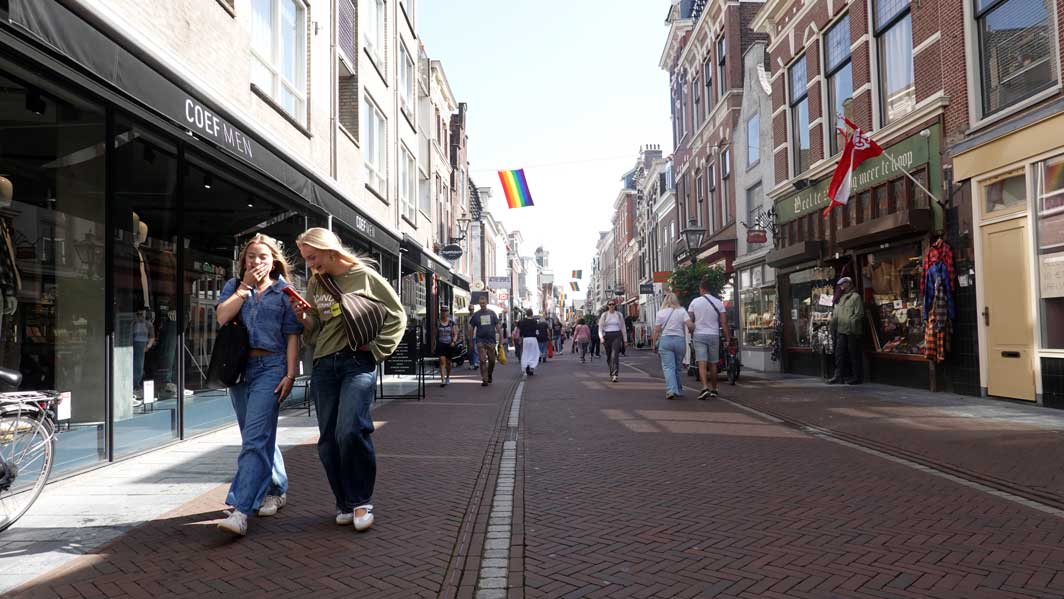 - Haarlemmerstraat, often referred to as Haarlem Straat, is Leiden’s main and most central shopping street. More than a kilometre long, it runs right through the heart of the city, in the De Camp and Maredorp neighbourhoods. It is, of course, largely pedestrianised, making it a particularly pleasant street to explore on foot. 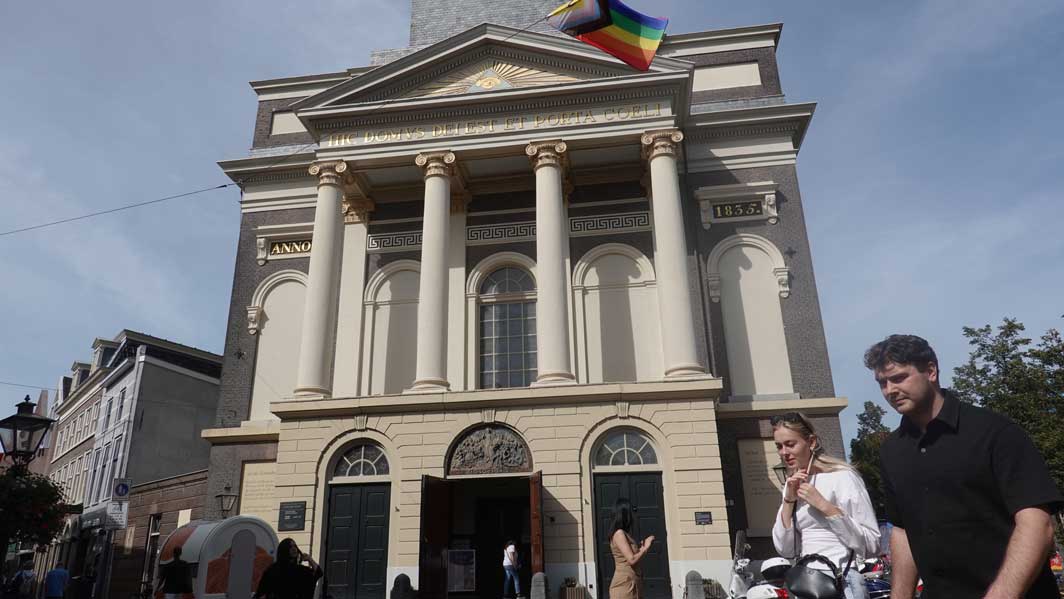 - Then we arrived at Hartebrugkerk, one of the most interesting churches in Leiden, not least because it marks the Catholics' return to the public cityscape after the Reformation. The church was built in 1836 based on designs by architect Theo Molkenboer (1796–1863). It is designed in a neoclassical style, with a facade that is almost like a classic Greco-Roman temple: four Ionic columns support a triangular temple pediment. 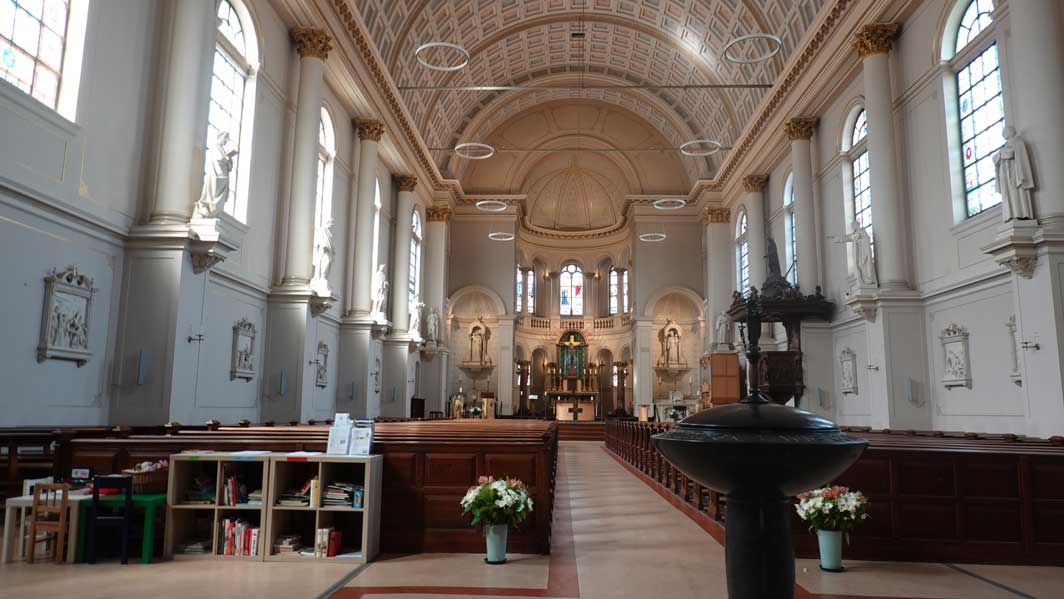 The first cornerstone was laid on April 21, 1836, and the church was consecrated on November 28, 1837. It was the first larger Catholic church in Leiden to be built openly facing a public street after religious freedom was restored in 1798. Before this, Catholics had to use so-called schuilkerken – hidden churches, often set up in ordinary houses. When we came out of the church, we continued straight ahead and crossed the next canal. A canal junction is a lovely place to open a restaurant. Spacious and open on warm days, with plenty to watch as life unfolds along the water. We chose the restaurant on the right in the picture: De Waag. And we stayed there for quite a while. 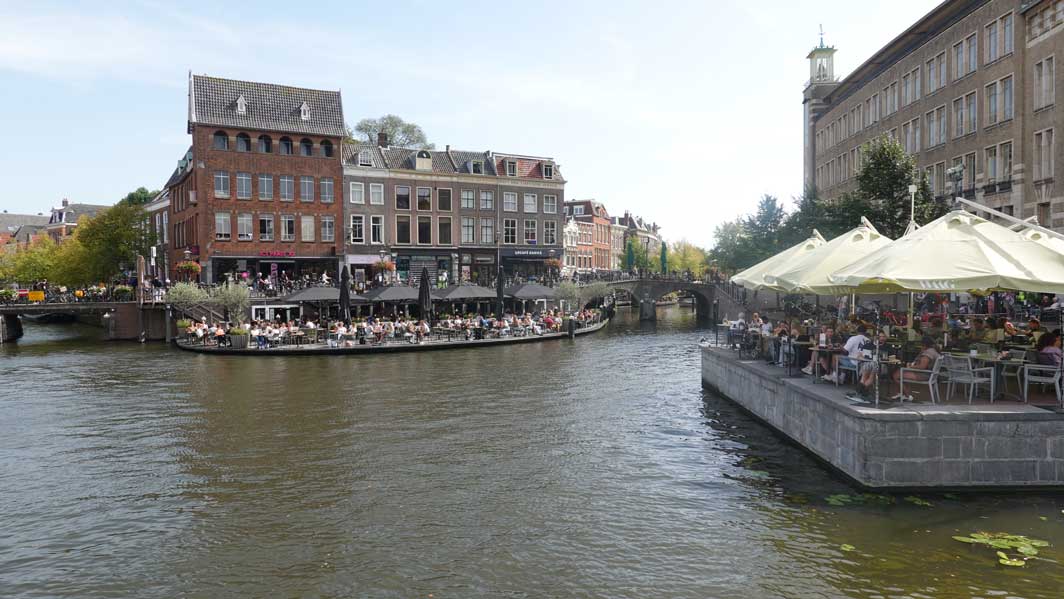 - We chose the restaurant on the right in the picture: De Waag. And we stayed there for quite a while. 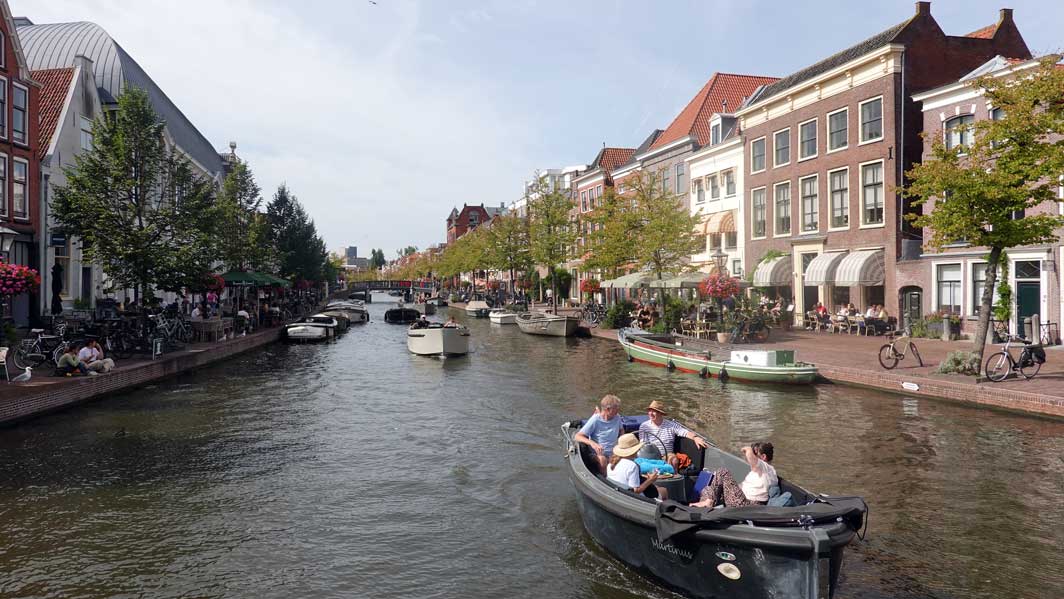 - There was a lively stream of canal boats passing by – no life jackets, as there probably would have been in Norway, and perhaps a little beer in hand. 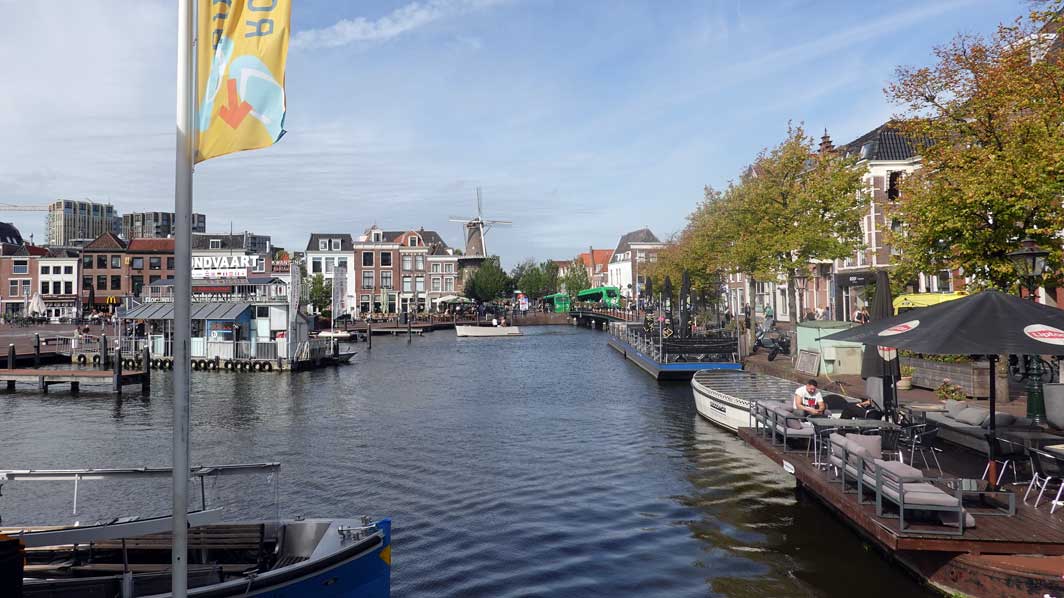 And so we could say goodbye to Leiden and Alphen, to the canals and rivers – indeed, all the waterways, the boats, the windmills, and everything that makes the Netherlands what it is. But we’ll probably be back one day. "Until next time!” En zo konden we afscheid nemen van Leiden en Alphen, van de kanalen en rivieren – eigenlijk van alle waterwegen, de boten, de molens en alles wat zo typisch Nederlands is. Maar we komen vast nog wel eens terug. “Tot de volgende keer!” |
|||
|
Back to
Alphen aan den Rijn 2026 Gouda, Den Haag, Alphens 2025 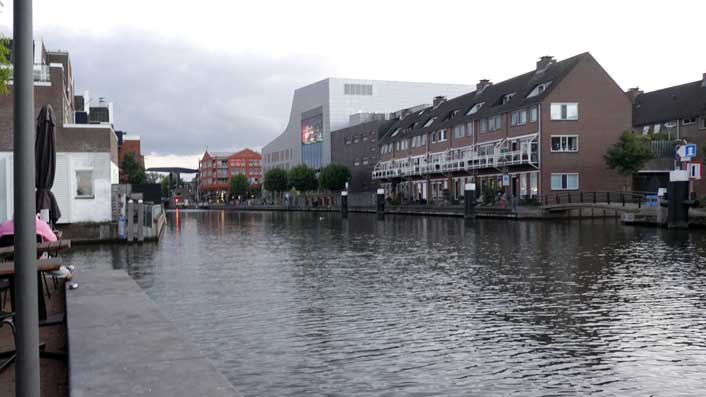 |
|||